Updated October 2026. First published April 26, 2026.
A breath test result over 0.08 feels like the end of a DUI case. It is not. The number is only as good as the rules, the records and the person behind it, and Florida's rules are specific enough to check line by line.
The Short Version
- Florida measures breath alcohol directly, in grams per 210 liters of breath. A result of 0.08 or higher is prima facie evidence of impairment, but only if the State shows the test followed FDLE's approved methods.
- FDLE's rules in Chapter 11D-8 require two samples within 0.020 of each other, a permitted operator, a 20-minute period in which the person has nothing by mouth and does not regurgitate, monthly agency inspections and a yearly FDLE inspection.
- When the State cannot show substantial compliance with those rules, it loses its shortcut: the presumptions, and the easy way of getting the result into evidence.
- Rising alcohol, mouth alcohol, the instrument's history and the operator's paperwork can all affect what a number means. None of them is automatic. Each depends on the records in your case.
- Since October 1, 2025, refusing a lawful breath test is a crime in Florida, not just a license suspension.
- You have only 10 days after the arrest to request a formal review of the license suspension.
In this article
- What a Florida Breath Result Is, and Is Not
- The Rules Every Breath Test Must Follow
- The 20-Minute Observation Period
- Mouth Alcohol, Reflux, Dental Work and Other Substances
- Two Samples That Must Agree
- Operator Permits and Instrument Inspections
- The Records Behind the Machine
- Breath Versus Blood: The Partition Ratio
- Rising Alcohol and Retrograde Extrapolation
- What the Defense Can Get: Muldowny and the Source Code Fight
- Refusing the Test Under Trenton's Law
- The 10-Day Formal Review
- Defenses That Do Not Depend on the Machine
- What to Do After a Failed Breath Test
- Questions and Answers
If you were arrested for DUI in Florida and blew over the legal limit, you may feel that the machine has already decided your case. Many people do. The truth is that a breath result is evidence the State must earn the right to use, and Florida has written down exactly how it must be earned: who may run the test, how the person must be observed, how many samples are needed, how closely they must agree, and how often the machine must be checked.
This article explains those rules in plain English, how a breath result is challenged, and where each challenge is strong or weaker than people online sometimes claim. It also corrects several points in the earlier version of this article.
What a Florida Breath Result Is, and Is Not
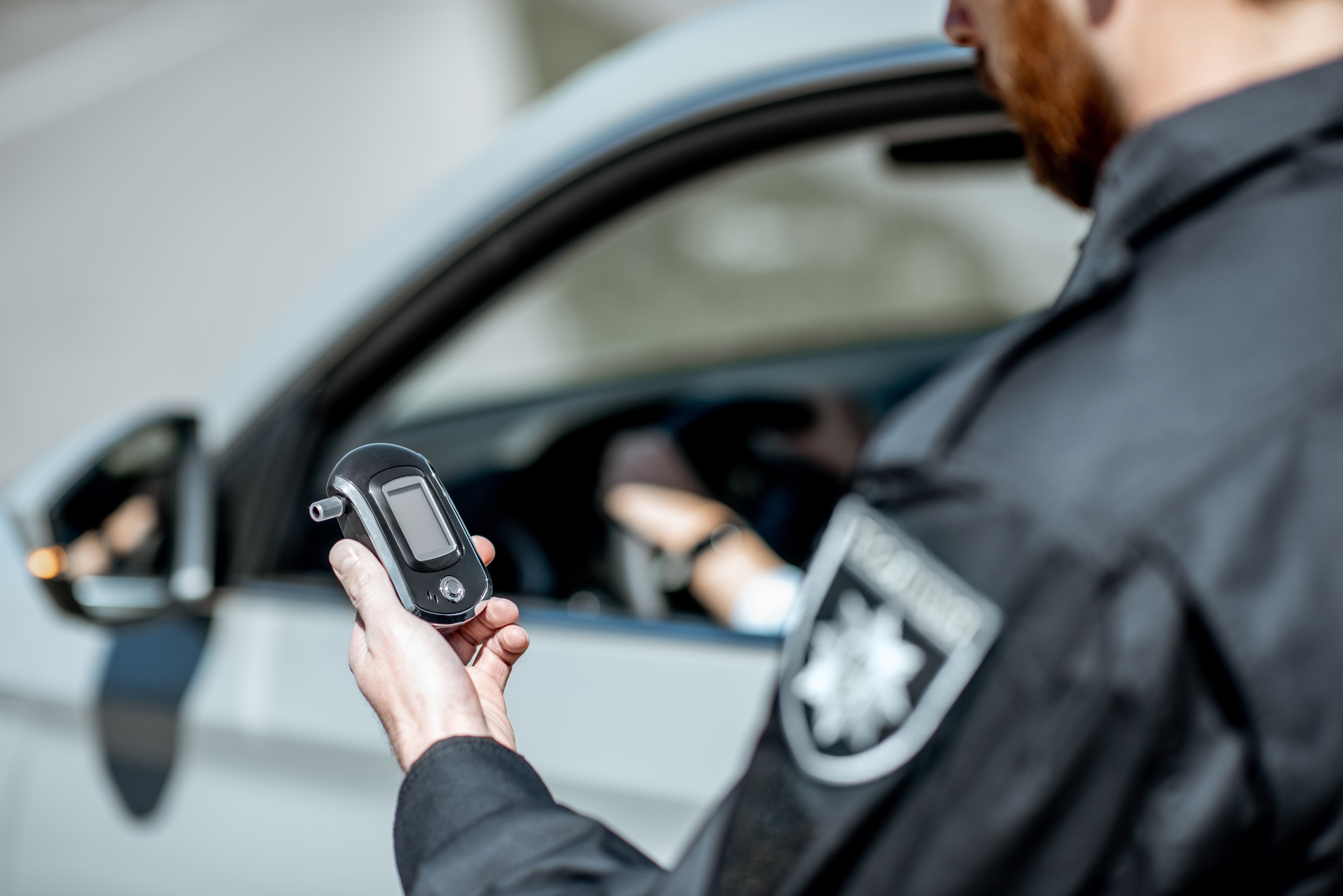
Florida police use breath test instruments made by CMI, Inc. For two decades that meant the Intoxilyzer 8000. Since FDLE's rule amendments took effect on July 17, 2025, Rule 11D-8.003 approves both the Intoxilyzer 8000 and the newer Intoxilyzer 9000, and agencies are changing over. (FDLE rule package, March 2025) Our article on Florida's new breath test machine explains what the 9000 changes.
A common claim is that the machine "guesses" your blood alcohol from your breath. In Florida, that is not how the law works. The DUI statute defines an unlawful breath alcohol level directly, as 0.08 or more grams of alcohol per 210 liters of breath. (section 316.193, Florida Statutes) The machine reports a breath number, and the law compares it to a breath limit.
What that number means in court is set by section 316.1934(2):
| Breath or blood alcohol level | What Florida law says |
|---|---|
| 0.05 or less | Presumed not under the influence of alcohol. |
| Above 0.05 but below 0.08 | No presumption either way. The result may be considered with other evidence. |
| 0.08 or higher | Prima facie evidence of being under the influence. |
Those presumptions come with a condition. Under section 316.1934(3) and section 316.1932(1)(b)2, a breath test is valid only if it was performed substantially according to methods approved by the Florida Department of Law Enforcement (FDLE). That one requirement is the foundation of most breath test defenses.
Two other limits you may have read about are real but work differently. A driver under 21 faces an administrative license suspension at 0.02, and a commercial driver can be disqualified at 0.04 in a commercial vehicle. Those are license rules, not separate DUI limits, and they are explained on our DUI Defense page.
The Rules Every Breath Test Must Follow
FDLE's rules are in Chapter 11D-8 of the Florida Administrative Code. Several were amended on July 17, 2025 and again on July 1, 2026. These are the ones that matter most in a breath test case:
| Rule | What it requires |
|---|---|
| 11D-8.002 | Definitions, including what counts as an "approved breath alcohol test": at least two samples, collected within 15 minutes of each other, with two results within 0.020 g/210L. |
| 11D-8.003 | The approved breath test method and the approved instruments: the CMI Intoxilyzer 8000 and Intoxilyzer 9000. |
| 11D-8.004 | FDLE's own inspection and registration of each instrument: before first use, at least once every twelve months, and after any repair before the instrument goes back into evidentiary use. |
| 11D-8.006 | The agency inspection by the police agency's own permitted inspector, at least once each calendar month, and whenever an instrument is taken out of or returned to evidentiary use. |
| 11D-8.007 | Who may access the instrument, the secured location, the 20-minute observation period and the operating procedures for each model. |
| 11D-8.008 | Breath test operator and agency inspector permits, which are tied to the specific instrument and must be renewed on a four-year cycle. |
Substantial compliance, and what happens without it
The Florida Supreme Court has held that before a breath result comes in, the State must offer evidence that the test was performed substantially in accordance with approved methods, on an approved machine, by a qualified operator, and that the machine was inspected and tested as the rules require. Minor deviations do not automatically keep a result out if the evidence shows the machine itself remained accurate. (State v. Donaldson, 579 So. 2d 728 (Fla. 1991))
When the State cannot show substantial compliance, it loses its shortcut. The statutory presumptions depend on compliance with the rules, and they are not available when the State instead tries to prove reliability the traditional way, through expert witnesses. (State v. Miles, 775 So. 2d 950 (Fla. 2000)) That traditional route is expensive, it opens the instrument's entire history to cross-examination, and it is not always available. In a later case, the Florida Supreme Court noted that results which do not qualify under the implied consent rules may still be admitted if the State lays that traditional foundation, including proof that the testing method is reliable. (State v. Bodden, 877 So. 2d 680 (Fla. 2004), a urine test case)
Recent cases show how much this matters. In State v. Kilburn, 418 So. 3d 275 (Fla. 2d DCA 2025), an appeals court left in place the suppression of three breath results because an Intoxilyzer 8000 had been repaired by someone the rules did not authorize to repair it, and it rejected the State's substantial compliance argument. In August 2026, a Jacksonville panel suppressed a result for a similar reason involving O-rings. We explain both in The $1 O-Ring That Could Unravel Florida's Breath Test Program, so we do not repeat that discussion here.
Every case is different. A result in one case does not predict the result in another.
The 20-Minute Observation Period
Before a breath test, Rule 11D-8.007 requires that the breath test operator, an agency inspector, the arresting officer, or a person the permit holder designates "reasonably ensure" that the person has not taken anything by mouth and has not regurgitated for at least 20 minutes.
The point is mouth alcohol. Alcohol sitting in the mouth or throat, from a recent drink, a product containing alcohol, or something brought up from the stomach, is far more concentrated than the alcohol that reaches the breath from deep in the lungs. If it is still there when the person blows, the reading can be falsely high. Waiting 20 minutes with nothing by mouth is meant to let it dissipate.
The earlier version of this article said the officer must watch you for 20 minutes "straight." That overstates the rule. The rule's words are "reasonably ensure," and the rule allows more than one person to do it. Courts look at whether, on the whole record, the State showed reasonable assurance that nothing happened. So the useful questions are factual:
- When did the observation period start, and who says so? Times on the breath printout, the affidavit, the booking records and the video should line up.
- Was the person observing actually in a position to see and hear? Filling out paperwork, typing on a computer, leaving the room or facing away all weaken the claim.
- Did the person burp, hiccup, cough up anything or complain of reflux? Did anyone ask?
- Was anything put in the mouth: gum, a mint, tobacco, water, an inhaler, medication?
- If something happened, did the 20 minutes start over?
Mouth Alcohol, Reflux, Dental Work and Other Substances
Some medical conditions and everyday products come up in breath cases again and again. They are worth examining, and they are often overstated, so here is an honest account.
- Acid reflux and GERD. Reflux can bring stomach contents, including alcohol, into the throat and mouth. That is precisely what the 20-minute rule's ban on regurgitation is aimed at. A documented reflux condition, medication for it, and any sign of burping or reflux on the video can matter. Whether reflux actually affected a particular test is a question for an expert, not a given.
- Dentures, bridges and dental work. The claim is that dental appliances can trap alcohol in the mouth beyond the observation period. The science on this is mixed. It is worth raising with an expert when there is recent drinking and a short gap before the test, not as a defense in itself.
- Products that contain alcohol. Some mouthwashes, breath sprays and liquid medications contain alcohol. Used shortly before a test, they can produce mouth alcohol. Used more than 20 minutes before, their effect should have passed, which is why the observation period matters.
- Diabetes, fasting and low-carbohydrate diets. These can raise acetone in the breath. The earlier version of this article said the machine can mistake acetone for alcohol. That overstates it: Florida's instruments are designed to detect interfering substances, and FDLE's rules provide an acetone solution used in checking the instruments. The fair question is whether that detection worked on your test and whether some other compound was involved.
- The instrument's own warnings. The Intoxilyzer is built to reject samples that look like mouth alcohol and to flag radio interference and other problems. Every message the machine produced, including rejected samples, belongs in the defense review.
Body temperature matters too. A study published in the Journal of Forensic Sciences found breath readings rose about 8.6 percent above the matching blood level for every 1°C rise in body temperature. (Fox and Hayward, 1989) A fever or illness at the time of the test is worth documenting.
Two Samples That Must Agree
In Florida a single blow is not an approved breath test. Under Rule 11D-8.002, an approved breath alcohol test is at least two samples collected within 15 minutes of each other, producing two results within 0.020 g/210L, reported on one breath test affidavit. If the first two results differ by more than 0.020, a third sample must be analyzed.
The earlier version of this article said that if the two samples do not agree, the results "shouldn't count." The rule is more complicated, and you should know it:
- If the first two results are more than 0.020 apart, the operator is supposed to take a third sample, not stop.
- If a person does not provide the required number of valid samples, the rule treats that as a refusal to submit to the breath test.
- The same rule says that results which are obtained, if proved to be reliable, are acceptable as a valid breath alcohol level. So a single valid sample is not automatically excluded. The State has to prove it reliable, and the defense can contest that.
The 0.020 agreement requirement lives in FDLE's rule, not in section 316.1934 itself. It still matters, because the statute requires substantial compliance with FDLE's approved methods. Florida applies a similar check to blood: two portions of the same sample must agree within 0.010. See our article on blood draws in Florida DUI cases.
Operator Permits and Instrument Inspections
The operator's permit
Only a person holding a valid FDLE permit may run an evidentiary breath test. Under Rule 11D-8.008, an operator must complete the basic breath test operator course for the applicable instrument, and an agency inspector must hold an operator permit for the corresponding instrument and complete the agency inspector course for it. Permits must be renewed through a continuing education course on a four-year cycle. A permit for the Intoxilyzer 8000 is not a permit for the 9000, which matters while agencies run both.
The statute forgives "insubstantial" defects in a permit. (section 316.1934(3)) A test run by someone with no permit for that instrument, or whose permit had lapsed, is a different matter.
The monthly and yearly inspections
Each instrument must pass an agency inspection by a permitted agency inspector at least once each calendar month, and whenever it is taken out of or put back into evidentiary use. (Rule 11D-8.006) FDLE itself must inspect each instrument at least once every twelve months, and after any repair before it is used again. (Rule 11D-8.004) Those inspections check the instrument against known alcohol standards. For the Intoxilyzer 9000, the monthly check uses dry gas standards.
The inspections that matter are the ones around your test date: the last one before it, the next one after it, and anything in between, including any time the instrument was out of service, repaired or recalibrated.
Why Mr. Bernstein took the officers' training
Alan S. Bernstein has completed the Intoxilyzer 8000 breath test operator course and the agency inspector course, the same courses Florida officers take, as well as the equivalent courses for the earlier Intoxilyzer 5000. He has also trained in gas chromatography, the method used to analyze blood, at Axion Labs in Chicago. He knows what an operator is taught to do before, during and after a test, and what an inspector is and is not allowed to do, because he sat through the same classes.
The Records Behind the Machine
Florida law gives a person who took a breath test, or the person's lawyer, a right to "full information" about the test on request. Since 2006, the statute limits that to the type of test and the procedures followed, the time the sample was collected, the numerical results, the type and status of the operator's permit, and the date of the instrument's last inspection, and it excludes the instrument's manuals, schematics and software. (section 316.1932(1)(f)4) The ordinary discovery rules in a criminal case, and public records requests, reach further. FDLE also publishes many instrument records online.
These are the records a careful defense gathers:
- The breath test affidavit and printout, which identify the instrument by model and serial number, the operator and the results.
- The operator's permit and the agency inspector's permit, for that model, on that date.
- The agency inspection reports for the months around the test, and FDLE's most recent Department inspection.
- The instrument's full repair and maintenance history, who did the work, and whether that person or facility was authorized to do it.
- Every test run on that instrument in the days around yours, including other people's rejected samples and error messages, which can reveal a machine having problems.
- For a 9000, the dry gas standard that was used, including its lot and expiration date.
- Video from the patrol car, body cameras and the breath testing room.
Repairs have become the most active area of breath test litigation in Florida. Who may repair an instrument, and whether replacing a part is maintenance or repair, is the subject of our O-ring article.
Breath Versus Blood: The Partition Ratio
For decades, breath testing rested on an assumed ratio between alcohol in the blood and alcohol in the breath, usually stated as 2,100 to 1. People differ, and the same person differs from one moment to the next. That variation is called the partition ratio, and it is a staple of breath test defense articles.
Two honest points about it:
- Florida's law sidesteps it for the per se charge. Because Florida defines the unlawful level in breath units, grams per 210 liters of breath, the State does not have to convert a breath result into a blood level to prove the 0.08 charge. (section 316.193)
- The variation usually cuts the other way. In a study of 799 drivers arrested in Sweden, the average blood to breath ratio was about 2,400 to 1, and after adjusting for timing only about 4 percent of the drivers had a ratio below 2,100. (Jones and Andersson, Journal of Forensic Sciences, 1996) For most people, that means a breath test reads lower than the matching blood test, not higher.
Rising Alcohol and Retrograde Extrapolation
The law cares about your alcohol level while you were driving, not an hour later at the station. Alcohol is absorbed over time after the last drink, more slowly with food. If a person drank shortly before driving, the level can still be rising during the stop, the roadside exercises and the wait for the test. A result of 0.09 at the station does not prove 0.08 or more behind the wheel.
The State does not have to bridge that gap to get the result admitted. The Florida Supreme Court has held that the inability to relate a test result back to the time of driving goes to weight and credibility, not admissibility, provided the test was done within a reasonable time after the stop. (Miller v. State, 597 So. 2d 767 (Fla. 1991), as described in Vitiello v. State, 281 So. 3d 554 (Fla. 5th DCA 2019)) But weight is exactly what a jury decides.
Retrograde extrapolation is the attempt to calculate a driver's earlier alcohol level working backward from a later test. It depends on assumptions: when drinking started and stopped, what was eaten, whether the person was still absorbing alcohol or already eliminating it, and the person's elimination rate. When those facts are unknown or contradicted, the calculation is only as good as the guesses behind it. A defense expert can show the range of possibilities, and where it includes levels below 0.08 at the time of driving.
This is why your own timeline matters so much, and why you should write it down now: when you started and stopped drinking, what and how much, when and what you ate, when you were stopped and when you blew.
What the Defense Can Get: Muldowny and the Source Code Fight
In 2004, in State v. Muldowny, 871 So. 2d 911 (Fla. 5th DCA 2004), a Florida appeals court held that DUI defendants were entitled to documentation about the breath test machine itself, such as operating manuals, maintenance manuals and schematics, as part of the "full information" the statute promised, and it upheld the exclusion of breath results when the State did not produce it. (as described in a 2009 Ninth Circuit appellate order; State v. Farneth (Fla. 6th Cir. 2006)) Later courts read Muldowny to require a hearing first, and to treat exclusion as a sanction used only when nothing less will do. (Farneth)
Defense lawyers then asked for the machine's software, its source code. The manufacturer refused, calling the code a trade secret, and county courts around Florida split on whether it had to be produced. (Associated Press, March 2006) The Legislature answered in 2006 by amending the statute to say that "full information" does not include the instrument's manuals, schematics or software, or other material not in the State's actual possession. (section 316.1932(1)(f)4) The Fifth District also held in Moe v. State, 944 So. 2d 1096 (Fla. 5th DCA 2006), that the State did not have to produce source code it did not possess.
That did not end the question. In 2009, a Ninth Circuit appellate panel upheld an order granting defense discovery about the Intoxilyzer 8000, reasoning that the amended statute did not excuse the State from producing material it did possess, and that a defendant who challenges the accuracy of the results must be able to examine the instrument's reliability. (Ninth Judicial Circuit, No. 2007-AP-38 (2009)) Our Intoxilyzer 9000 article describes a 2005 Sarasota County source code order and how courts in other states have handled the issue.
Source code litigation is a major undertaking and rarely the right first step. The practical lesson of the Muldowny line is narrower: the defense may test the machine through discovery, the State must produce what it has, and a court can sanction the State when it does not.
Refusing the Test Under Trenton's Law
Florida's implied consent law says that by driving in Florida, a person agrees to an approved breath or urine test after a lawful DUI arrest. (section 316.1932) Until October 1, 2025, a first refusal cost a driver the license but was not a crime. Trenton's Law changed that.
| Refusal | Crime | License |
|---|---|---|
| First refusal | Second-degree misdemeanor: up to 60 days in jail and a $500 fine | 1-year suspension |
| Refusal after an earlier refusal suspension | First-degree misdemeanor: up to 1 year in jail and a $1,000 fine | 18-month suspension |
The refusal crime has elements the State must prove: probable cause that the person was driving or in actual physical control while impaired, a lawful arrest, warnings about both the license suspension and the fact that refusing is a crime, and a refusal after those warnings. (section 316.1939) A refusal can also be used as evidence in the DUI case. (section 316.1932) The earlier version of this article said refusal becomes a crime only on a second refusal. That has not been true since October 1, 2025.
Whether the warnings were given correctly, whether the arrest was lawful, and whether the person truly refused or was physically unable to give an adequate sample are the central questions. People with smaller lungs, asthma or other conditions can have real trouble giving the volume the machine requires, and an officer may call that a refusal. Under the rule described above, failing to give the required number of valid samples is treated as a refusal, so this question comes up often.
You also have a right to an independent test at your own expense, and the officer may not interfere with your opportunity to get one, although arranging it is your responsibility. (section 316.1932(1)(f)3)
The 10-Day Formal Review
A DUI arrest with a breath result of 0.08 or more, or a refusal, starts an administrative license suspension that is separate from the criminal case. The officer takes the license and issues a temporary permit good for 10 days. A driver has 10 days from the arrest to request a formal review hearing with the Florida Department of Highway Safety and Motor Vehicles. (section 322.2615) Miss the deadline and the suspension stands without a hearing.
For a breath test case, the hearing is also an early look at the State's evidence. The breath test affidavit, the operator and the instrument records can be examined, and the officers' sworn testimony is often useful later in the criminal case. Eligible first-time drivers may instead waive the hearing and apply for a business-purposes hardship license within the same 10 days. Which path is better depends on the facts. See DUI Defense for the suspension periods and options.
Defenses That Do Not Depend on the Machine
A breath result is the last step in a chain. If an earlier link fails, the result may never reach a jury.
- The stop. Police need reasonable suspicion of a traffic violation or crime to pull a car over. If the stop was unlawful, what followed, including the breath result, can be suppressed.
- The arrest. The officer needs probable cause of impairment, usually built on driving, observations and roadside exercises. If probable cause was lacking, the implied consent law never applied, because it requires a lawful arrest.
- The implied consent warning. The officer must give specific warnings before requesting the test. Incomplete, inaccurate or confusing warnings matter most in a refusal case, and they can bear on whether consent to the test was voluntary.
- Impairment itself. Even with a breath result, the State usually also argues the driver's normal faculties were impaired. Video that shows clear speech, steady balance and normal behavior can contradict the number.
What to Do After a Failed Breath Test
- Mark the 10-day deadline. Count from the arrest date. Talk to a lawyer well before day 10 about the formal review or a hardship license.
- Write down your timeline today. When you started and stopped drinking, what and how much, what and when you ate, when you were stopped, when you arrived at the station and when you blew.
- Write down what happened in the breath room. Who was there, whether anyone watched you, whether you burped, coughed or felt reflux, whether you had anything in your mouth, and what the officer told you.
- Collect your health information. Reflux, diabetes, dental work, asthma or lung conditions, medications and any illness or fever at the time.
- Do not discuss the case with anyone but your lawyer, and do not post about it.
- Move quickly on evidence. Video and some records are not kept forever. A lawyer can ask for them to be preserved.
Questions and Answers
Can a Florida breath test be wrong?
Yes. A breath result can be affected by mouth alcohol, a missed observation period, an instrument with an inspection or repair problem, an operator without a valid permit for that machine, or a rising alcohol level. Whether any of these happened in a particular case is a question for the records and the video.
Does a breath result over 0.08 mean I will be convicted?
No. It is evidence, not a verdict. The State has to show the test followed FDLE's approved methods to get the benefit of the presumptions, and a jury decides what weight to give the result. No lawyer can promise an outcome.
What is the 20-minute rule in a Florida DUI?
FDLE's Rule 11D-8.007 requires the operator, an inspector, the arresting officer or a designated person to reasonably ensure that you did not take anything by mouth or regurgitate for at least 20 minutes before the test. It is meant to prevent mouth alcohol from inflating the result.
Do the two breath samples have to match?
They must be within 0.020 of each other to make an approved breath test. If the first two are further apart, a third sample is supposed to be taken. A result that does not meet the rule is not automatically excluded, but the State then has to prove it reliable.
Is refusing the breath test better than taking it?
There is no general answer, and since October 1, 2025, a refusal is itself a crime in Florida, in addition to a license suspension, and it can be used as evidence. That decision is usually made at the station, before a lawyer can be reached. After the fact, both a test result and a refusal can be defended.
I was tested on the new Intoxilyzer 9000. Does any of this apply?
Yes. The same statute and Chapter 11D-8 govern both machines, with model-specific forms, permits and procedures. See Florida's New Breath Test Machine Is Here.
Alan S. Bernstein is a criminal defense attorney who has practiced in South Florida for more than four decades, with a practice devoted largely to DUI defense. He is a founding member, faculty member and Florida state delegate of the National College for DUI Defense, the author of Florida DUI Defense: The Law and Practice, and has completed the Intoxilyzer 8000 breath test operator and agency inspector courses.
Failed a Breath Test? The Number Can Be Examined.
Call Alan S. Bernstein P.A. for a free, confidential consultation about a DUI breath test charge or investigation in Broward, Miami-Dade, Palm Beach, Martin and Hendry counties.
Weekdays 954-925-3111 | Evenings and weekends 954-347-1000
Call 954-925-3111DUI Defense · DUI Manslaughter · DUI Serious Bodily Injury · Contact
The information in this article is general and is not legal advice. Every case is different. A result in one case does not predict the result in another. Contacting the firm does not create an attorney-client relationship.
Sources
- Florida Statutes (2026): section 316.193, section 316.1932, section 316.1934, section 316.1939 and section 322.2615.
- Florida Administrative Code, Chapter 11D-8: Rule 11D-8.002, Rule 11D-8.003, Rule 11D-8.004, Rule 11D-8.006, Rule 11D-8.007 and Rule 11D-8.008, as amended through July 1, 2026.
- Florida Department of Law Enforcement, Cabinet agenda package on Chapter 11D-8 amendments (Mar. 5, 2025).
- State v. Donaldson, 579 So. 2d 728 (Fla. 1991); State v. Miles, 775 So. 2d 950 (Fla. 2000); State v. Bodden, 877 So. 2d 680 (Fla. 2004).
- State v. Kilburn, 418 So. 3d 275 (Fla. 2d DCA 2025).
- Miller v. State, 597 So. 2d 767 (Fla. 1991), as quoted in Vitiello v. State, 281 So. 3d 554 (Fla. 5th DCA 2019).
- State v. Muldowny, 871 So. 2d 911 (Fla. 5th DCA 2004), and Moe v. State, 944 So. 2d 1096 (Fla. 5th DCA 2006), as described in Ninth Judicial Circuit Appellate Division, No. 2007-AP-38 (June 2009) and State v. Farneth, Sixth Judicial Circuit Appellate Division (2006).
- Associated Press, Lawyers challenge breath test machine (Mar. 6, 2006).
- A. W. Jones and L. Andersson, Variability of the blood/breath alcohol ratio in drinking drivers, Journal of Forensic Sciences 41(6) (1996); Fox and Hayward, Effect of hyperthermia on breath alcohol analysis, Journal of Forensic Sciences (1989).
Comment (1)
Breath Test Refusal Florida: First Refusal Now a Crime
says November 22, 2026 at 11:39 am[…] reading on this site: Florida DUI Breath Test Defenses; Blood Draws in Florida DUI […]
Comments are closed.