Published November 24, 2026. Statutory text quoted from the 2026 Florida Statutes; case language quoted from the published opinions.
Sex offender registration in Florida is an in-person reporting system run by the Florida Department of Law Enforcement under section 943.0435. A person convicted of a listed sex offense, including by a plea where adjudication is withheld, must report to the sheriff within 48 hours and reregister two or four times every year. Under section 943.0435(11) the duty lasts for life unless a court later removes it.
For a person charged in Palm Beach County, Broward County or Miami-Dade County, whether the case sits in West Palm Beach, Fort Lauderdale or Miami, registration is usually the consequence that outlasts everything else. Probation ends. A prison sentence ends. Registration, in most cases, does not.
It also is not something the judge chooses. It follows automatically from the offense a person is convicted of, which is why it has to be understood before a plea is entered and not after. This article quotes the statute so you can see exactly what it requires.
The Short Version
- Section 943.0435(1)(h) lists the offenses that make a person a sexual offender, including sections 794.011, 800.04, 827.071 and 847.0135.
- Under section 943.0435(1)(b), a guilty or no contest plea counts as a conviction even when the judge withholds adjudication.
- Section 943.0435(2) requires an in-person report at the sheriff’s office within 48 hours, and section 943.0435(3) requires a trip to a driver license office within 48 hours after that.
- Section 943.0435(14) requires in-person reregistration twice a year, or four times a year for specified offenses.
- Section 943.0435(11) makes registration last for life, with a petition possible after 25 years for some offenses and a separate close-in-age motion under section 943.04354.
- Under section 943.0435(9)(a), failing to register or to report a change is a third-degree felony, and each failure is a separate offense.
In this article
Who Has to Register
The statute does not leave registration to anyone’s discretion. section 943.0435 defines a sexual offender by a list of statutes. A person convicted of committing, or of attempting, soliciting or conspiring to commit, one of the listed offenses meets the definition.
The list in section 943.0435(1)(h) includes the charges this firm sees most often in South Florida sex cases:
- sexual battery under section 794.011;
- lewd or lascivious offenses under section 800.04;
- child sexual abuse material offenses under section 827.071;
- online solicitation and traveling to meet a minor under section 847.0135, the statute used in sting cases;
- kidnapping or false imprisonment where the victim is a minor, and certain video voyeurism offenses.
The definition also reaches people who were convicted somewhere else. A person who lives in Florida and carries a sexual offender designation from another state is covered, and so is a conviction from a federal or military court for a similar offense. Juveniles are covered in a narrower way: an adjudication of delinquency counts only for specified offenses and only when the juvenile was 14 or older at the time.
Why a Withhold Does Not Avoid It
Many people assume that a plea with adjudication withheld keeps a conviction off the record and therefore keeps them off the registry. For registration, that assumption is wrong. Section 943.0435(1)(b) defines the word convicted for this statute, and the definition says it:
“means that there has been a determination of guilt as a result of a trial or the entry of a plea of guilty or nolo contendere, regardless of whether adjudication is withheld”
— section 943.0435(1)(b), Florida Statutes (2026)
A no contest plea to a listed offense is a conviction for registration purposes. So is a plea entered only to put the case behind you. The label on the plea does not matter; the statute number does.
There is a second trap. The judge taking the plea is not required to warn you about registration. The Florida Supreme Court decided that question when it reviewed a decision of the Fourth District Court of Appeal:
“we hold that the sexual offender registration requirement is a collateral consequence of the plea, and therefore failure to inform the defendant of that requirement before he entered the plea does not render his plea involuntary”
The Legislature has written the same idea into the statute itself. Section 943.0435(12) describes what the designation is and is not:
“The designation of a person as a sexual offender is not a sentence or a punishment but is simply the status of the offender which is the result of a conviction for having committed certain crimes.”
— section 943.0435(12), Florida Statutes (2026)
Put those two texts together and the practical point is plain. A person who pleads without understanding registration cannot count on undoing the plea later by saying nobody mentioned it. The explanation has to come from the defense lawyer, before the plea.
The 48-Hour Deadlines
Registration starts with a personal appearance, and the clock is short. Under section 943.0435(2)(a), a person who is not in the custody or under the supervision of the Department of Corrections must report in person at the sheriff’s office in the county of conviction within 48 hours after being convicted. A person released from the Department’s custody or supervision has 48 hours from release.
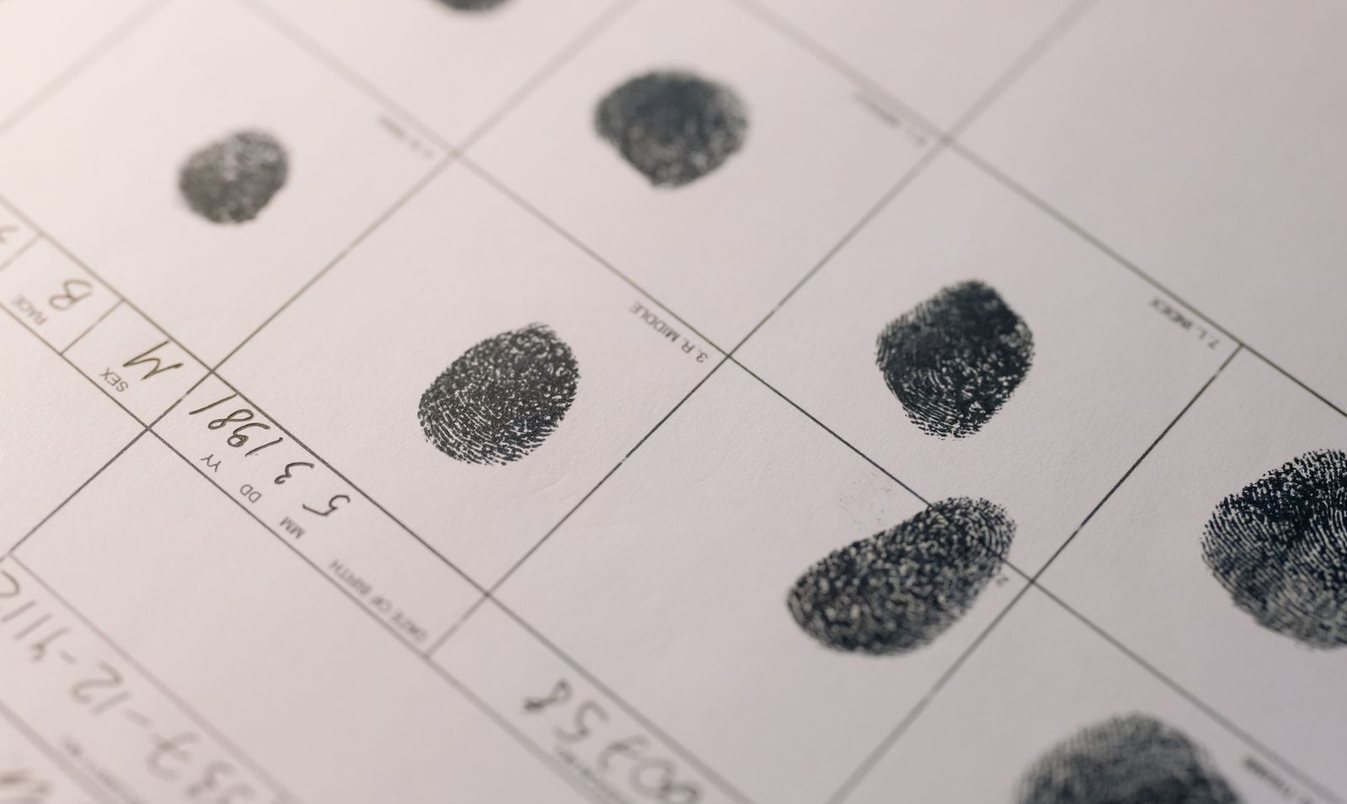
At that appointment the sheriff’s office collects far more than a name and address. Section 943.0435(2)(b) requires fingerprints, palm prints and a photograph, the social security number, employment information, every residence address, every vehicle owned, home and cellular telephone numbers, electronic mail addresses and Internet identifiers.
A second appointment follows. Section 943.0435(3) sends the person to a driver license office within 48 hours after the sheriff’s report to obtain or renew a license or identification card.
| Event | Deadline | Subsection |
|---|---|---|
| Initial report at the sheriff’s office | Within 48 hours after conviction or release | 943.0435(2)(a) |
| Driver license office | Within 48 hours after the sheriff’s report | 943.0435(3) |
| Change of residence or legal name | Within 48 hours after the change, in person | 943.0435(4)(a)1. |
| Moving to another state | In person at least 48 hours before leaving | 943.0435(7) |
| Travel outside the United States | In person at least 21 days before departure | 943.0435(7) |
| Reregistration | Birth month and sixth month after, or every third month | 943.0435(14) |
Each line in that table is a separate duty. The statute treats a missed one as a crime, which is covered below.
Reporting Two or Four Times a Year
The initial report is not the end of it. Section 943.0435(14)(a) sets the baseline schedule:
“A sexual offender must report in person each year during the month of the sexual offender’s birthday and during the sixth month following the sexual offender’s birth month to the sheriff’s office in the county in which he or she resides or is otherwise located to reregister.”
— section 943.0435(14)(a), Florida Statutes (2026)
That is twice a year, in person, for life. For a group of more serious offenses the schedule doubles. Section 943.0435(14)(b) requires reregistration in the birth month “and every third month thereafter” for a person whose registration rests on sexual battery under section 794.011, kidnapping or false imprisonment of a minor, lewd or lascivious molestation of a child under 12, and several other lewd or lascivious offenses where the court made specific findings about age, force or unclothed contact.
The court makes those findings in writing. They can decide whether a person reports to the sheriff two times a year or four, so what the court finds, and what a plea agreement says about the facts, matters long after the sentence is over.
How Long Registration Lasts
The default is life. Section 943.0435(11) says so directly:
“a sexual offender shall maintain registration with the department for the duration of his or her life unless the sexual offender has received a full pardon or has had a conviction set aside in a postconviction proceeding”
— section 943.0435(11), Florida Statutes (2026)
The same subsection opens one door. A person may petition the circuit court for removal after being released from confinement, supervision or sanction, whichever is later, for at least 25 years, with no arrest for any felony or misdemeanor since release. Even then the court may grant or deny the petition, and the state attorney must be given notice and may oppose it.
That 25-year petition is closed to many people. It is not available when registration rests on an adult conviction for sexual battery under section 794.011, kidnapping or false imprisonment, lewd or lascivious molestation of a child under 12, or the other offenses listed in section 943.0435(11)(a)1.
The second door is section 943.04354, sometimes called the close-in-age provision. It applies only to a single conviction under section 800.04, section 827.071 or section 847.0135(5), and only when the age gap fits the statute:
“Is not more than 4 years older than the victim of this violation who was 13 years of age or older but younger than 18 years of age at the time the person committed this violation.”
— section 943.04354(1)(c), Florida Statutes (2026)
A motion under section 943.04354 can be heard at sentencing. The court may grant it, and if the court denies it the statute does not allow a second motion. That makes the first attempt the only attempt, and preparation for it part of the defense of the case itself.
Missing a Deadline Is a New Felony
Registration is enforced by criminal prosecution. Section 943.0435(9)(a) makes it a felony of the third degree to fail to register, to fail to report a change, to fail to reregister, or to knowingly give false registration information. Under section 775.082 a third-degree felony is punishable “by a term of imprisonment not exceeding 5 years”.
“Each instance of a failure to register or report changes to the required information specified in this paragraph constitutes a separate offense.”
— section 943.0435(9)(a), Florida Statutes (2026)
The list of things that can be missed is long: a new address, a new job, a new vehicle, a new phone number, a new e-mail address or Internet identifier. The statute also makes it a violation to fail to respond to address verification mail within 3 weeks.
When a court does not impose prison for a registration felony, section 943.0435(9)(b) requires a mandatory minimum term of community control with electronic monitoring: 6 months for a first offense, 1 year for a second and 2 years for a third or later offense.
Sexual Offender or Sexual Predator
Florida has two designations, and people confuse them. Sexual offender status under section 943.0435 follows automatically from the conviction. Sexual predator status under section 775.21 is a separate designation made by the court in a written finding.
Section 775.21(4) reserves the predator designation for two groups: a person convicted of a capital, life or first-degree felony violation of certain statutes, including sections 794.011 and 800.04, and a person convicted of any listed felony who has a prior conviction for a listed offense. A sexual predator is subject to community and public notification under section 775.21(7) in addition to registration.
Both designations place a person on the public registry maintained by the Florida Department of Law Enforcement.
What This Means While the Case Is Pending
Because registration is tied to the statute of conviction, three things follow for anyone facing a sex charge in Fort Lauderdale, Hollywood, Boca Raton, Delray Beach or anywhere else in the state.
First, a case that ends in dismissal or acquittal carries no registration, because there is no conviction. Second, a conviction for an offense that is not on the list in section 943.0435(1)(h) does not make a person a sexual offender under that paragraph, so the exact charge matters as much as the sentence. Third, the written findings a court makes can change the reporting schedule and close the 25-year petition.
None of that can be promised in any case. It does explain why registration belongs at the center of the first conversation with a defense lawyer, alongside bond and whether to speak to police. Our sex crimes defense page describes the charges the firm handles.
Questions and Answers
What is registration as a sex offender in Florida?
It is a reporting system under section 943.0435. A person convicted of a listed sex offense must report in person to the sheriff, provide identifying information including fingerprints, addresses, vehicles, phone numbers and Internet identifiers, keep that information current, and reregister on a fixed schedule. The Florida Department of Law Enforcement maintains the public registry.
Do I have to register if adjudication is withheld?
Yes. Section 943.0435(1)(b) defines convicted to include a determination of guilt from a trial or a plea of guilty or nolo contendere, regardless of whether adjudication is withheld. A no contest plea with a withhold to a listed offense still triggers registration.
How often does a registered sex offender have to report in Florida?
Under section 943.0435(14)(a), twice a year in person: during the birth month and during the sixth month after it. For the offenses listed in section 943.0435(14)(b), including sexual battery under section 794.011, it is the birth month and every third month after. The report is made at the sheriff’s office in the county where the person lives, whether that is Broward County, Palm Beach County or Miami-Dade County.
Is sex offender registration for life in Florida?
In most cases, yes. Section 943.0435(11) requires registration for the duration of the person’s life unless there is a full pardon or the conviction is set aside. Some people may petition for removal after 25 years with no new arrest, and section 943.04354 allows a motion in a narrow close-in-age situation. A court may grant or deny either request.
What happens if a registered sex offender misses a deadline?
Section 943.0435(9)(a) makes a failure to register, reregister or report a change a third-degree felony, punishable by up to 5 years in prison under section 775.082, and each failure is a separate offense. If the court does not impose prison, section 943.0435(9)(b) requires community control with electronic monitoring for at least 6 months on a first offense.
Does the judge have to tell me about registration before I plead?
Not according to the Florida Supreme Court. In State v. Partlow, 840 So. 2d 1040 (Fla. 2003), the court held that sexual offender registration is a collateral consequence of a plea, so a judge’s failure to mention it does not make the plea involuntary. A person should learn about registration from a defense lawyer before deciding on any plea.
Charged With an Offense That Carries Sex Offender Registration?
Registration is decided by the offense of conviction, so the time to talk about it is before any plea. Call Alan S. Bernstein P.A. for a free, confidential consultation about a sex crime charge in Broward, Miami-Dade, Palm Beach, Martin and Hendry counties, including West Palm Beach, Boca Raton, Delray Beach, Fort Lauderdale, Hollywood and Miami.
Weekdays 954-925-3111 | Evenings and weekends 954-347-1000
Sources
- Florida Statutes (2026): section 943.0435 (sexual offenders required to register; penalty); section 943.04354 (removal of the requirement to register in special circumstances); section 775.21 (the Florida Sexual Predators Act); section 775.082 (penalties).
- Offense statutes named in the registration list: section 794.011; section 800.04; section 827.071; section 847.0135.
- State v. Partlow, 840 So. 2d 1040 (Fla. 2003).
This article is general information about Florida law as of November 24, 2026. Quoted statutory language is from the 2026 Florida Statutes as published by the Florida Senate; quoted case language is from the published opinions. It is not legal advice, and reading it does not create an attorney-client relationship. Every person charged with a crime is presumed innocent unless and until proven guilty. Every case is different. A result in one case does not predict the result in another.