Updated October 18, 2026. First published September 5, 2026.
A Massachusetts jury deliberated for about 38 hours and could not agree on whether a mother was legally responsible for an unthinkable act. Here is where that case stands, and how the same question would be decided under Florida's very different insanity law.
The Short Version
- Lindsay Clancy's murder trial in Plymouth County, Massachusetts ended in a mistrial on September 4, 2026, after the jury could not reach a unanimous verdict. She has not been convicted and is presumed innocent.
- As of October 18, 2026, prosecutors have not announced whether they will retry her. The judge denied a defense motion for a not guilty finding on October 1. A defense motion arguing that a retrial would violate double jeopardy is pending, and the next hearing is set for November 2.
- Massachusetts uses a broader insanity test and makes the prosecution prove criminal responsibility beyond a reasonable doubt. Florida uses the narrower M'Naghten test and makes the defendant prove insanity by clear and convincing evidence.
- In Florida, a not guilty by reason of insanity verdict does not mean freedom. The court decides whether the person must be committed to the Department of Children and Families, treated as an outpatient or discharged, with court review afterward.
- Insanity at the time of the offense and competency to stand trial are different questions with different rules. Both depend on careful, early work with qualified mental health experts.
- When a Florida jury hangs, the State may retry the case. The new trial must generally begin within 90 days of the mistrial under the speedy trial rule.
In this article
- Where the Clancy Case Stands Now
- What Was Reported About the Deliberations
- What an Insanity Defense Does and Does Not Mean
- Florida's Insanity Test: Section 775.027
- Massachusetts and Florida Side by Side
- Postpartum Depression and Psychosis as Evidence
- How an Insanity Defense Moves Through a Florida Case
- Competency Is a Different Question
- After a Not Guilty by Reason of Insanity Verdict
- If a Florida Jury Cannot Agree
- If Someone You Love Is Facing Charges
- Questions and Answers
Few criminal cases are as painful to read about as one in which a parent is accused of harming her own children. This article does not describe what happened inside that home, and it does not name the children. It focuses on the legal question the Massachusetts jury could not resolve: when serious mental illness is part of the story, who decides whether a person is criminally responsible, and by what standard?
That question is not unique to Massachusetts. Florida families face it too, in murder cases and in far less serious ones, whenever a loved one was in a mental health crisis at the time of an arrest. The rules in Florida are different, and in important ways they are harder on the defense. Knowing them early can change how a case is prepared.
Where the Clancy Case Stands Now
Lindsay Clancy, a former nurse from Duxbury, Massachusetts, is charged with three counts of murder in the January 2023 deaths of her three young children. She pleaded not guilty. According to prosecutors, she attempted suicide the same night and has been paralyzed and in a wheelchair since. (ABC News) Her defense did not dispute that she caused the deaths; it argued that she was suffering from postpartum psychosis and the effects of her medications and should not be held criminally responsible. Prosecutors argued she understood what she was doing. (ABC News, Oct. 1, 2026)
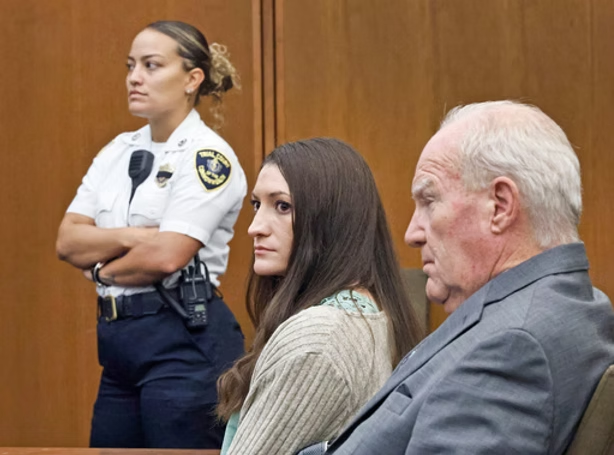
After more than five weeks of testimony, the jury deliberated for about 38 hours over seven days. On Friday, September 4, 2026, Plymouth Superior Court Judge William Sullivan declared a mistrial. The defense had asked for time to seek emergency relief from the Massachusetts Supreme Judicial Court to stop the mistrial, and the request was denied. (CNN, Sept. 4, 2026; ABC News) She was returned to a hospital in state custody for ongoing mental health treatment.
Since the mistrial:
- September 29, 2026. Ms. Clancy appeared in court for the first time since the mistrial. The judge heard a defense motion asking for a finding of not guilty because of insufficient evidence (Massachusetts Rule 25), a separate defense motion to dismiss on double jeopardy grounds, arguing that the mistrial should not have been declared, and a motion by the District Attorney to limit public statements by the defense. (WBUR)
- October 1, 2026. Judge Sullivan denied the motion for a not guilty finding in a five-page written order, concluding that the evidence was enough for a rational fact-finder to find the elements of murder proven beyond a reasonable doubt. (ABC News)
- Retrial decision. Plymouth County District Attorney Timothy Cruz said his office is still conducting a thorough review and has not decided whether to retry the case. (WBUR; ABC News)
- November 2, 2026. The next court date. The double jeopardy motion remains pending, and a retrial date could be discussed then. (ABC News; WBUR)
Ms. Clancy is presumed innocent. No court has found her guilty of any crime, and no court has found that she lacked criminal responsibility. A mistrial is not a verdict either way. This article will be updated as the case develops.
What Was Reported About the Deliberations
Jury notes reported in court indicated an 11 to 1 split. (CNN) According to WBUR, 11 jurors favored finding Ms. Clancy not criminally responsible, and one juror did not agree. (WBUR) The defense has publicly criticized that juror, and the District Attorney's motion to limit public statements singled out those comments, arguing they could prejudice a retrial and discourage future jurors. We do not name the juror here. Jurors are private citizens performing a public duty, and a lone juror who honestly disagrees is doing exactly what the unanimity requirement allows.
Update: The Holdout Juror Speaks Publicly
On October 15, 2026, the holdout juror gave his first televised interview, to Fox News. According to The New York Times, he said he believed Ms. Clancy had been "methodical" and had thought the killings through, and that this was one of the main reasons he would not agree to a not-guilty verdict. He said he had never served on a jury before, that he decided the case strictly on the evidence and that there were tense moments in the deliberation room. The interviewer did not ask about specific events in the jury room. (The New York Times) The Times also reported that the trial lasted seven weeks and that the jury deliberated for nearly 40 hours.
The interview adds to a dispute that was already before the court. During deliberations, several jurors complained that the holdout was not following the judge's instructions or the law, and the defense asked the judge to remove him. After the mistrial, the defense asked the judge to question him about his jury questionnaire answers and his phone use during deliberations, without asking about the substance of the deliberations. That request is part of the defense's argument that a retrial would violate double jeopardy. (The New York Times; ABC7) The juror has said he has no doubt Ms. Clancy is guilty. She remains presumed innocent of the charges.
Can Jurors Talk After a Trial in Florida?
Yes. Once discharged, a Florida juror is free to speak publicly, or to decline. The rules are stricter for the lawyers and for the courts. A Florida lawyer may not contact jurors after a trial except to find out whether the verdict may be subject to legal challenge, and only with reason to believe grounds exist and after filing notice with the court. (Rule Regulating The Florida Bar 4-3.5(d)(4)) And a juror generally cannot testify about matters that inhere in the verdict, such as the jurors' discussions, beliefs or reasons, to attack a verdict. (section 90.607(2)(b), Florida Statutes) Outside influences, such as a juror doing his own research or being contacted by someone outside the jury, can be examined. That line, between what happened inside the jurors' minds and what came in from outside, is the same one the Clancy defense is trying to work within.
Two lessons apply in any state. First, insanity cases are rarely about whether something happened. They are about competing expert opinions on a person's mind at a single moment in the past, and reasonable people can weigh those opinions differently. Second, a split jury, even 11 to 1, is not a verdict. In Massachusetts and in Florida alike, a criminal verdict must be unanimous.
What an Insanity Defense Does and Does Not Mean
Many people hear "not guilty by reason of insanity" and picture someone walking out of court free. That is not how it works in Florida or in Massachusetts.
- It usually concedes the act. The defense is not that nothing happened. It is that, because of a mental illness, the person cannot be held criminally responsible for what happened.
- It is about one moment. The question is the person's condition at the time of the offense, not before and not now.
- It is not a diagnosis. Insanity is a legal standard, not a medical term. Many people with serious, genuine mental illness do not meet it.
- It does not mean release. A person found not guilty by reason of insanity in Florida can be committed to a secure state forensic facility, with court review, for as long as the legal criteria are met.
It is also a rare defense, and a hard one. It requires thorough records, qualified experts and a defense team that can explain a frightening illness to a jury in plain terms.
Florida's Insanity Test: Section 775.027
Florida's insanity defense is written into section 775.027 of the Florida Statutes. The statute starts from a presumption: all persons are presumed to be sane. Insanity is an affirmative defense, and it is established only if:
- the defendant had a mental infirmity, disease or defect; and
- because of that condition, the defendant either did not know what he or she was doing or its consequences, or, although knowing what he or she was doing and its consequences, did not know that it was wrong.
This is the M'Naghten test, named for an 1843 English case. The Florida Supreme Court has described it as Florida's long-standing test for insanity. The statute adds that a mental infirmity, disease or defect is not a defense except as the statute provides. In other words, a diagnosis alone is never enough. The illness must have destroyed the person's understanding of what she was doing or of the fact that it was wrong.
The burden is on the defendant
Under section 775.027(2), "the defendant has the burden of proving the defense of insanity by clear and convincing evidence." That has not always been the law. Before 2000, a Florida defendant only had to present enough evidence to raise a reasonable doubt about sanity, and then the State had to prove sanity beyond a reasonable doubt (Yohn v. State, 476 So. 2d 123 (Fla. 1985)). The Legislature changed that with Senate Bill 268, which became law on June 19, 2000, as chapter 2000-315. (Florida Senate bill history; Senate staff analysis)
Clear and convincing evidence is a demanding standard. It is more than the "more likely than not" standard used in most civil cases, though less than the "beyond a reasonable doubt" standard the State must meet to prove the crime itself. The State still has to prove every element of the offense beyond a reasonable doubt. The burden on insanity is a separate one, and it rests on the defense.
What Florida's test leaves out
Florida's test asks only about knowledge: knowing what you were doing, and knowing it was wrong. It has no separate prong for a person who knew the act was wrong but could not control herself. The Senate staff analysis of the 2000 bill described it as rejecting the "irresistible impulse" theory. (Senate staff analysis) Florida also does not recognize a general "diminished capacity" defense; the Florida Supreme Court held in Chestnut v. State, 538 So. 2d 820 (Fla. 1989), that evidence of a mental condition short of insanity is generally not admissible to negate the intent element of a crime. Those limits matter enormously in a case built on a mood disorder or psychosis.
Massachusetts and Florida Side by Side
Massachusetts uses a different, broader test. In Commonwealth v. McHoul, 352 Mass. 544 (1967), the Supreme Judicial Court adopted a standard based on the American Law Institute's Model Penal Code. Under the Massachusetts model jury instructions, a person is not criminally responsible if, because of a mental disease or defect, she lacked substantial capacity either to appreciate the wrongfulness of her conduct or to conform her conduct to the requirements of the law. (Massachusetts Model Jury Instructions on Homicide)
Just as important, Massachusetts puts the burden on the prosecution. Once the issue is raised, the Commonwealth must prove beyond a reasonable doubt that the defendant was criminally responsible, and the defendant has no burden to prove that she was not. (Mass. Model Jury Instructions, citing Commonwealth v. Cook, 438 Mass. 766 (2003), and Commonwealth v. Berry, 457 Mass. 602 (2010))
| Massachusetts | Florida | |
|---|---|---|
| Test | Lack of substantial capacity to appreciate wrongfulness or to conform conduct to the law (McHoul) | Did not know what she was doing or its consequences, or did not know it was wrong (M'Naghten, section 775.027) |
| Inability to control conduct | Can qualify (the "conform" prong) | Does not qualify by itself |
| "Appreciate" versus "know" | "Appreciate" means to understand, not merely to know | Asks whether the defendant knew |
| Who has the burden | The Commonwealth, beyond a reasonable doubt | The defendant, by clear and convincing evidence |
| Separate sanity phase | No; the jury decides guilt and responsibility in the same trial | No; the jury decides guilt and insanity in the same trial |
| Unanimous verdict required | Yes | Yes |
| If the defense succeeds | Commitment proceedings for a person mentally ill and dangerous, with periodic court review | Commitment, outpatient treatment or discharge under Rule 3.217 and chapter 916, with court review |
The practical point is this. A case that produces an 11 to 1 split in favor of the defense under the Massachusetts standard would face a steeper climb in Florida, because a Florida jury would have to be convinced, clearly and convincingly, that the defendant did not know what she was doing or did not know it was wrong. Evidence that she planned, concealed or understood the consequences of her actions tends to weigh heavily against the defense under the Florida test. Every case is different. A result in one case does not predict the result in another.
Postpartum Depression and Psychosis as Evidence
Postpartum depression and postpartum psychosis are different conditions. Postpartum psychosis is rare, affecting roughly 1 to 2 of every 1,000 women who give birth. It typically begins within days or weeks of delivery and can involve hallucinations, delusions and a loss of insight into being unwell. Health authorities describe it as a medical emergency that is severe but treatable. (NHS Wales, Betsi Cadwaladr University Health Board)
Florida has no special statute for postpartum conditions. They are treated like any other mental illness, which means they can matter in three distinct places in a criminal case:
- Insanity. A postpartum psychosis can qualify as a "mental infirmity, disease or defect" under section 775.027. The question is still whether it caused the person not to know what she was doing or that it was wrong. Postpartum depression alone rarely meets that test.
- Competency. If the illness is still active, the person may not be able to proceed to trial at all until treated (see below, and section 916.12).
- Sentencing. If there is a conviction, mental illness can support a sentence below the guidelines. Florida's list of mitigating circumstances includes a defendant whose capacity to appreciate the criminal nature of her conduct, or to conform it to the law, was substantially impaired, and a defendant who needs specialized treatment for a mental disorder and is amenable to it. (section 921.0026(2)(c) and (d)) In a capital case, extreme mental or emotional disturbance and substantially impaired capacity are statutory mitigating circumstances. (section 921.141(7)(b) and (f))
Some states have gone further. In 2018 Illinois amended its sentencing law to make untreated or undiagnosed postpartum depression or psychosis a mitigating factor, and created a route for some people already convicted of a forcible felony to seek resentencing. (Public Act 100-0574, effective June 1, 2018; Illinois General Assembly) Florida has no comparable law.
In practice, the strength of a postpartum mental health defense depends on records: obstetric and pediatric visits, prescriptions and dose changes, therapist notes, hospital admissions, texts and messages, and what family members saw in the days and weeks before. That evidence can disappear or be overlooked if no one gathers it early.
How an Insanity Defense Moves Through a Florida Case
Florida's procedure is set out in the Florida Rules of Criminal Procedure, Rules 3.210 through 3.219. (Florida Rules of Criminal Procedure) The main steps are:
- Written notice (Rule 3.216(b) and (c)). A defendant who intends to rely on insanity must give written notice. The deadline is 15 days after arraignment or the filing of a written plea of not guilty. The notice must state, as far as possible, the nature of the insanity to be proven and the names and addresses of the witnesses. Without notice, the court will not admit the defense's evidence of insanity, although for good cause the court may allow late notice.
- A confidential defense expert (Rule 3.216(a)). For a defendant who is indigent or partially indigent and has private or appointed counsel other than the public defender, the court may appoint one expert to help the defense. That expert reports only to defense counsel, and the work is protected by the attorney-client privilege.
- The State's examination (Rule 3.216(d)). Once notice is filed, the State may ask the court to order an examination by the State's own mental health experts. Defense counsel may be present.
- Other mental health defenses (Rule 3.216(e) and (f)). A defense that relies on mental health evidence but is not insanity requires notice no later than 30 days before trial.
- Trial (Rule 3.216(i)). Court-appointed experts may testify as court witnesses. Either side may present other evidence of the defendant's mental condition. The jury must be told what happens to a defendant found not guilty by reason of insanity, so that no juror is misled into thinking the person will simply go home.
- The verdict (Rule 3.217(a)). If the jury acquits because of insanity, the verdict must say so. Florida does not hold a separate sanity phase; insanity is decided in the same trial as the charge.
The 15-day notice deadline comes early, often long before all the records are in. That is one reason families should involve an experienced criminal defense lawyer immediately. Decisions made in the first weeks, about evaluations, records and what is said to whom, can shape the entire case.
Competency Is a Different Question
Insanity looks backward, to the time of the offense. Competency looks at the present: can this person take part in her own defense right now? Under section 916.12(1), a defendant is incompetent to proceed if she lacks sufficient present ability to consult with her lawyer with a reasonable degree of rational understanding, or lacks a rational as well as factual understanding of the proceedings. Rule 3.210 sets the procedure for raising the issue.
Examining experts consider whether the defendant can appreciate the charges, the range of possible penalties and the adversarial nature of the process, disclose relevant facts to her lawyer, behave appropriately in court and testify relevantly. A person found incompetent is not tried until competency is restored through treatment. Rule 3.216(c) requires that, if counsel has reason to believe the defendant is incompetent, the insanity notice be filed together with the motion for a competency examination.
A person can be competent today and still have been legally insane months ago, or incompetent today even though she understood everything at the time of the offense. The two questions call for different evaluations, and confusing them is a common and costly mistake.
After a Not Guilty by Reason of Insanity Verdict
In Florida, what happens next is governed by Rules 3.217 through 3.219 and by chapter 916 of the Florida Statutes. Under Rule 3.217(b), if the court finds the defendant currently meets the criteria, it must do one of three things: commit the defendant to the Department of Children and Families, order outpatient treatment, or discharge the defendant. Any commitment or treatment order must include findings of fact and copies of the expert reports.
Under section 916.15, a defendant acquitted of a crime by reason of insanity may be involuntarily committed if she has a mental illness and, because of it, is manifestly dangerous to herself or others. Commitment is to a secure forensic facility operated by or for the Department. (section 916.106) The facility must report to the court within six months of admission, and again whenever the person no longer meets the criteria. The court holds hearings, can order up to one year of further commitment at a time under Rule 3.218, and must appoint two or three experts on request. There is no fixed end date; commitment continues as long as the criteria are met.
A court may instead order conditional release on an approved outpatient treatment plan under section 916.17, with regular reports to the court. If the person stops complying or deteriorates, the court must hold a hearing within 7 days and may return her to the Department. The court discharges the person only when supervised care is no longer needed.
For a family, the honest summary is this: a successful insanity defense trades a prison sentence for treatment under court supervision, possibly for many years. It is not an escape from the system. It is a different path through it.
If a Florida Jury Cannot Agree
Florida, like Massachusetts, requires a unanimous jury verdict to convict or acquit. Rule 3.440 says no verdict may be rendered unless all of the jurors concur. When jurors report that they are deadlocked, the judge may give a standard instruction encouraging them to keep deliberating without giving up honestly held views. Florida appellate courts have reversed convictions when a judge departed from the standard instruction in a way that pressured a holdout. If the jury still cannot agree, the judge declares a mistrial.
What happens then:
- Retrial is allowed. Under both the U.S. Constitution and Article I, section 9 of the Florida Constitution, no one may be put twice in jeopardy for the same offense. But a hung jury does not end jeopardy. The U.S. Supreme Court held in Richardson v. United States, 468 U.S. 317 (1984), that the government may retry a defendant after a mistrial caused by a genuinely deadlocked jury. (Richardson, via Cornell LII; Florida Constitution) A double jeopardy challenge, like the one pending in the Clancy case, usually asks whether the judge declared the mistrial too soon, without a true necessity.
- The clock restarts. Under Florida's speedy trial rule, Rule 3.191(m), a defendant who is to be retried after a mistrial must be brought to trial within 90 days of the declaration of the mistrial, subject to the rule's exceptions and remedies. (Fla. R. Crim. P. 3.191)
- A judgment of acquittal can be renewed. Under Rule 3.380(c), a defendant may make or renew a motion for judgment of acquittal within 10 days after the jury is discharged without a verdict, or within any further time the court allows. It is the Florida counterpart to the Massachusetts Rule 25 motion the Clancy defense filed, and it is rarely granted when the evidence of the act itself is strong.
- Negotiation is possible. A hung jury gives both sides new information. The State may reassess the strength of its case, and the defense knows how jurors received its experts. Some cases resolve by plea after a mistrial; others are retried; occasionally charges are dropped.
Florida Rules 3.580 through 3.600 govern motions for a new trial, but those apply after a verdict. When the jury hangs there is no verdict to set aside, and the case simply returns to the trial calendar.
In a Florida first-degree murder case, one more difference matters. If the State seeks the death penalty and obtains a conviction, a jury's finding of an aggravating factor must be unanimous, but a recommendation of death requires only 8 of 12 jurors. (section 921.141(2)) Mental health evidence is often central at that stage as well.
If Someone You Love Is Facing Charges
If a family member was in a mental health crisis at the time of an arrest, for any charge, these steps help protect both her health and her case:
- Safety first. If she is in danger now, call 911 or 988, the Suicide and Crisis Lifeline. New and expecting mothers, and their families, can also call or text the National Maternal Mental Health Hotline at 1-833-TLC-MAMA (1-833-852-6262), free and available 24 hours a day. (HRSA hotline information)
- Call a criminal defense lawyer before anyone gives a statement. A person in crisis may say things to police, doctors or relatives that are later used against her. She has the right to remain silent and the right to a lawyer.
- Gather records now. Write down every doctor, therapist, hospital, pharmacy and prescription you know of, with dates. Save texts, emails, journals and social media messages. Do not delete anything.
- Write down what you saw. Changes in sleep, speech, behavior and beliefs in the days and weeks before can become critical evidence. Write it down while memories are fresh, and share it only with her lawyer.
- Ask about competency and insanity separately. They are different issues on different timelines, and both may need an expert.
- Do not talk to the media or post online. Public statements by families and even by lawyers can be used in court or make jury selection harder.
For more on serious felony charges and how they are defended, see our Other Felonies page.
Questions and Answers
Was Lindsay Clancy found not guilty?
No. The trial ended in a mistrial because the jury could not reach a unanimous verdict. There was no verdict of guilty, not guilty or not criminally responsible. She remains presumed innocent, and as of October 9, 2026, prosecutors have not announced whether they will retry her.
Will there be a retrial in the Clancy case?
That has not been decided. The District Attorney has said his office is reviewing the case. A defense motion arguing that a retrial would violate double jeopardy is pending, and the next hearing is November 2, 2026.
What is the insanity test in Florida?
Under section 775.027, a defendant is not guilty by reason of insanity only if, because of a mental infirmity, disease or defect, she did not know what she was doing or its consequences, or did not know that what she was doing was wrong. The defendant must prove this by clear and convincing evidence.
Is postpartum psychosis a defense in Florida?
Not by itself. It can support an insanity defense if it meets the section 775.027 test, it can bear on competency to stand trial, and it can be a mitigating factor at sentencing. Florida has no separate postpartum defense.
Does a person found not guilty by reason of insanity go free in Florida?
Not usually. The court decides whether to commit her to the Department of Children and Families, order outpatient treatment or discharge her, and commitment can continue for as long as she remains mentally ill and dangerous, with court review.
What is the difference between insanity and incompetency?
Insanity concerns the defendant's mental state at the time of the offense and is a defense to the charge. Incompetency concerns her present ability to understand the case and help her lawyer, and it pauses the case until she is restored to competency.
When must the insanity defense be raised in Florida?
Rule 3.216 requires written notice within 15 days after arraignment or the filing of a written not guilty plea. A court may allow late notice for good cause, but a defense should never count on that.
Can Florida retry someone after a hung jury?
Yes. A mistrial caused by a genuinely deadlocked jury does not bar a retrial under the double jeopardy clauses, and Florida's speedy trial rule generally requires the new trial within 90 days of the mistrial.
Alan S. Bernstein is a criminal defense attorney who has practiced in South Florida for more than four decades. He defends people charged with serious felonies, including cases in which mental illness is a central issue. Alan S. Bernstein P.A. does not represent anyone involved in the Clancy case.
Is Mental Illness Part of a Loved One's Case?
The earliest decisions in these cases often matter most. Call Alan S. Bernstein P.A. for a free, confidential consultation about a serious felony charge or investigation in Broward, Miami-Dade, Palm Beach, Martin and Hendry counties.
Weekdays 954-925-3111 | Evenings and weekends 954-347-1000
Call 954-925-3111This article discusses a pending criminal case in Massachusetts. Lindsay Clancy has pleaded not guilty and is presumed innocent unless and until proven guilty beyond a reasonable doubt. The article is based on court rules, statutes and published news reports as of October 9, 2026, and the facts may have changed since. It is general information, not legal advice and not a prediction of the outcome of any case. Every case is different. A result in one case does not predict the result in another. Contacting the firm does not create an attorney-client relationship.
Sources
- The New York Times, Clancy trial's holdout juror says that the defendant was 'methodical' (Oct. 15, 2026); ABC7, Clancy defense cites double jeopardy, asks judge to question holdout juror (Sept. 2026); section 90.607, Florida Statutes; Rule Regulating The Florida Bar 4-3.5(d)(4).
- ABC News, Lindsay Clancy trial declared a mistrial. What happens next? (Sept. 4, 2026), and Lindsay Clancy judge denies motion to force not guilty finding (Oct. 1, 2026).
- CNN, Judge declares mistrial in Lindsay Clancy case after jurors can't reach a verdict (Sept. 4, 2026), as published by KEYT.
- WBUR, With retrial still undecided, DA pushes to limit public statements in Clancy case (Sept. 29, 2026).
- Florida Statutes (2026): section 775.027, section 916.106, section 916.12, section 916.15, section 916.17, section 921.0026 and section 921.141; Florida Constitution, Article I, section 9.
- Florida Senate, SB 268 (2000), Criminal Defense of Insanity (ch. 2000-315), and Committee on Criminal Justice staff analysis.
- The Florida Bar, Florida Rules of Criminal Procedure (July 2026 edition): Rules 3.191, 3.210, 3.216, 3.217, 3.218, 3.219, 3.380, 3.440 and 3.580 to 3.600.
- Massachusetts Supreme Judicial Court, Model Jury Instructions on Homicide: Criminal Responsibility; Commonwealth v. McHoul, 352 Mass. 544 (1967).
- Richardson v. United States, 468 U.S. 317 (1984), Cornell Legal Information Institute; Yohn v. State, 476 So. 2d 123 (Fla. 1985); Chestnut v. State, 538 So. 2d 820 (Fla. 1989).
- Illinois General Assembly, HB 1764 (Public Act 100-0574).
- Betsi Cadwaladr University Health Board (NHS Wales), Postpartum psychosis; American Hospital Association, National Maternal Mental Health Hotline.